

The Federal Constitution of 1988 establishes that no one
should be imprisoned until appeals are exhausted, except in cases involving
danger to society.
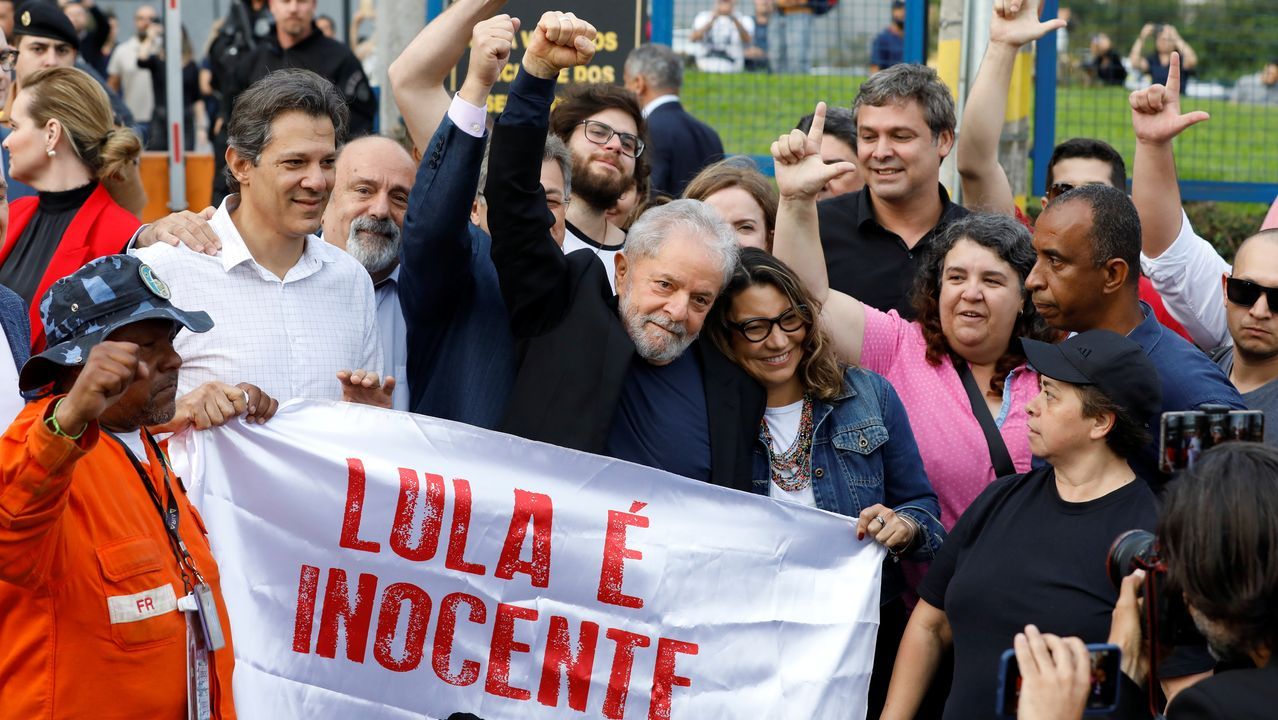
The former president of Brazil and Latin American leader,
Luiz Inacio Lula da Silva, was released on November 8 after the
unconstitutionality of the prison of a person in second instance by the Supreme
Federal Court of Brazil (STF) was declared. However, his freedom is not yet
definitive.
From now on, Lula's lawyers must exhaust all judicial
remedies while confirming or discarding their conviction for alleged
corruption.
In addition, the Supreme Court measure also affects 4,900
prisoners, including dozens of those convicted in the Lava Jato anti-corruption
case, according to the National Justice Council (CNJ). This release from prison
will not be immediate and Justice will analyze on a case-by-case basis after
the lawyers of each inmate request the corresponding review.
Lula Case Status
The former president (2003-2010), 74, was serving a
sentence of eight years and ten months in prison at the headquarters of the
Federal Police in Curitiba for alleged money laundering and passive corruption
in the case of an apartment in the São Paulo resort from Guarujá that he would
have received in exchange for political favors to the construction company OAS.
This process took place within the framework of the Lava Jato operation.
Lula was also sentenced to 12 years and 11 months in jail
for alleged corruption and money laundering in the reform of a house in
Atibaia, Sao Paulo, but the sentence is not confirmed in the second instance,
while he has at least another six open processes before the Justice.
Currently the Brazilian Constitution provides for
innocence until the trial is over, however, last year the Supreme Court changed
its reading on the law and authorized the imprisonment of convicted persons in
the second instance, such as the case of Lula and others almost 5,000 prisoners
The law remains the same, what changed was the
compression of the articles of the Constitution and this gave way to the
release of the ex-president on November 8.
For now, Lula is free but will not have his political
rights, therefore he will not be able to participate as a candidate in
elections.
What is coming now?
The next step in the defense of the Brazilian
ex-president is to continue with appeals, including a habeas corpus against the
exiles of Lava Jato, Sergio Moro, for having had a partial and foreign behavior
to the Rule of Law during the case of Lula. This appeal was rejected on June 26
by the Second Chamber of the Supreme Court of Brazil.
If the Federal Supreme Court accepts habeas corpus
against Moro, the Brazilian leader would be declared innocent and recover his
political rights.
The complaint against Moro arose after an investigation
published by the Intercepted portal, with messages exchanged between the exjuez
and the prosecutors of the Lava Jato case at the time of the trial through the
Telegram messaging network.
The messages show that Moro directed the investigations
of the prosecutors of the Public Prosecutor's Office, which is expressly
prohibited by law.
In addition, the lawyers of Lula indicated that the
partiality of Moro was demonstrated last year, with the appointment of the
exjuez as minister in the Government of President Jair Bolsonaro, who was the
main opposition contender in the presidential elections, in which the candidacy
of Lula was banned by the judicial process against his.
SOURCE: TelesurTV

