
References to drug use in the ancient world that exist
are scarce and isolated.
When they appear, drugs are mentioned almost
incidentally, and focus on medicinal and religious aspects, quickly leaving
aside from any recreational use.
However,
there was an international drug trade since 1000 BC, and archeology has been
combined with science to clarify an image that seems to have been carefully
hidden by ancient writers and their subsequent translators.
There
were more than a dozen ways to alter reality in the ancient world of the
Mediterranean, but two drugs dominated: opium and marijuana.
A thorough investigation conducted in the last two
decades has begun to reveal patterns in the use of these drugs, previously
unsuspected even by the classical historians of the twentieth century.
Opium Emergency
One of the first clues that the ancients considered that
the poppy was more than a pretty plant comes from its frequent use as a motif
in statues and engravings.
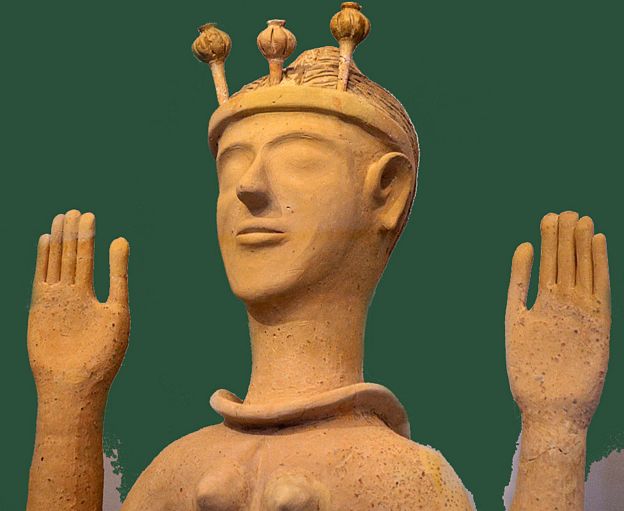
Archaeologists have discovered that, as early as 1600 BC,
small jars were made in the form of "capsules" of poppy, that bulky a ball that is under the petals of the opium-producing flower.
The shape of these artificial capsules made it reasonable
to assume what they were used for, but until recently it was impossible to be
sure.
In 2018, the journal Science reported that new techniques
for analyzing residues in excavated capsules had revealed that the plant
material contained not only opium, but sometimes other psychoactive substances.
These bottles and capsules have been found throughout the
Levant, Egypt and the Middle East. Their uniformity suggests that they
were part of an organized manufacturing and distribution system.
Happy plant
 Even
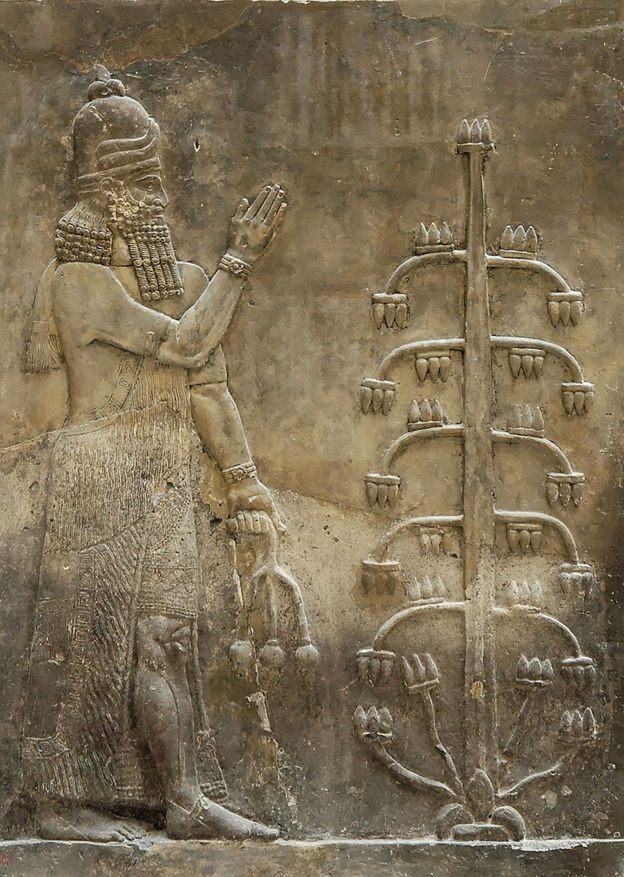
before, opium was grown in Mesopotamia. Some researchers do not doubt that the
Assyrians were aware of the properties of the plant.
Even
before, opium was grown in Mesopotamia. Some researchers do not doubt that the
Assyrians were aware of the properties of the plant.
In fact, the Assyrian name of the poppy can be read
(depending on how the cuneiform tablets that mention it are interpreted) as Hul
Gil, which means 'Happy Plant'.
Jugs containing opium residues have also been found in
Egyptian tombs, which is not surprising since poppy was widely cultivated in
Egypt.
In the classical era, the plant extract was known as
'Opium Thebiacum', which comes from the city of Egypt to which the Greeks gave
it the name Thebes. Another version was called 'Opium Cyrenaicum', a slightly
different version of the plant, grown westward, in Libya.
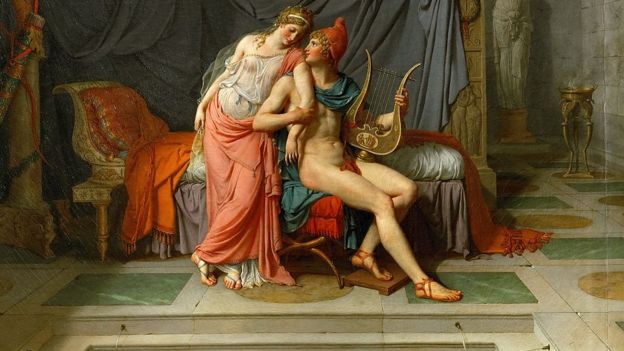 There is
a very suggestive passage in Homer's "The Odyssey", in which Helena
of Troy throws a drug into the wine that takes away painful memories and the
burning or pain and anger.
There is
a very suggestive passage in Homer's "The Odyssey", in which Helena
of Troy throws a drug into the wine that takes away painful memories and the
burning or pain and anger.
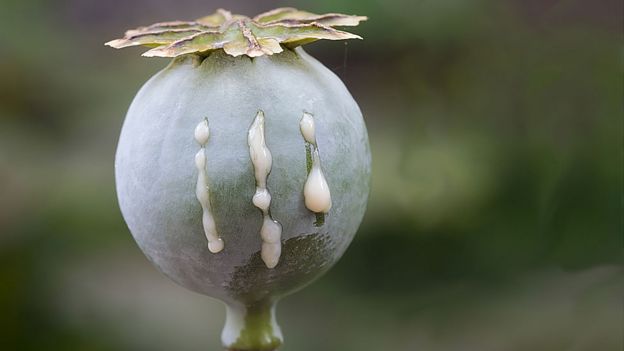 For his
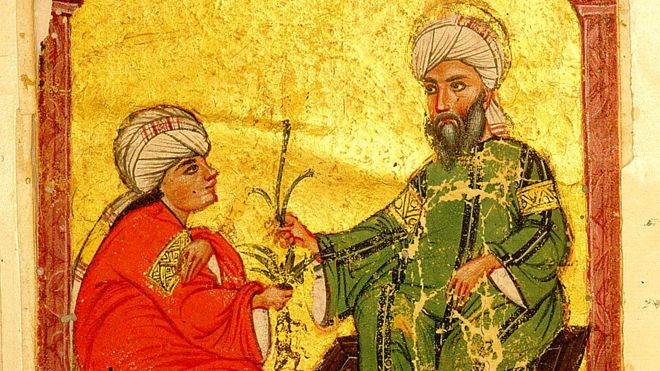
part, the doctor, pharmacologist and botanist of ancient Greece Dioscorides,
author of "De Materia Medica" (the encyclopedia of herbal medicine
and related medicinal substances), described the harvest technique:
For his
part, the doctor, pharmacologist and botanist of ancient Greece Dioscorides,
author of "De Materia Medica" (the encyclopedia of herbal medicine
and related medicinal substances), described the harvest technique:
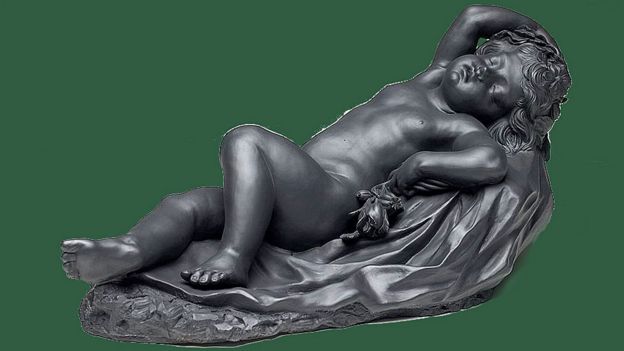 Dioscorides
also warns against overdose. "Kill," he says bluntly. In fact,
many Romans bought opium precisely for that reason.
Dioscorides
also warns against overdose. "Kill," he says bluntly. In fact,
many Romans bought opium precisely for that reason.
 The
Romans used an opium-based drink called 'crétic wine' to combat insomnia, and
also 'mêkonion' of poppy leaves, which was less potent.
The
Romans used an opium-based drink called 'crétic wine' to combat insomnia, and
also 'mêkonion' of poppy leaves, which was less potent.
"Subtle and excellent concoctions"
There is
a very suggestive passage in Homer's "The Odyssey", in which Helena
of Troy throws a drug into the wine that takes away painful memories and the
burning or pain and anger.
"Whoever
took it after mixing in the crater, would not shed tears on the cheeks for a
day, even if his father and mother had died or killed his brother or son before
his eyes with bronze."
Helena,
said Homer had "such subtle and excellent concoctions," Polidamna,
Ton's wife, a woman from Egypt, had given them to them, "whose fertile the land produces many potions; after mixing them some are good and others
pernicious."
The name
Ton is significant since the Egyptians believed that the god called Tot had
taught mankind the use of opium, according to Galen, the medical researcher of
the Ancient Age par excellence.
Eternal dream
For his
part, the doctor, pharmacologist and botanist of ancient Greece Dioscorides,
author of "De Materia Medica" (the encyclopedia of herbal medicine
and related medicinal substances), described the harvest technique:
"Those
who produce opium should wait until the spray has dried to cut lightly with a
knife around the top of the plant. They take care not to cut the inside.
"On
the outside of the capsule, a cut is made down. As the liquid comes out, use
your finger to put it in a spoon. Upon returning later, one can harvest more of the residue after it has
thickened, and still more the next day".
Dioscorides
also warns against overdose. "Kill," he says bluntly. In fact,
many Romans bought opium precisely for that reason.
Suicide
was not a sin in the Roman world, and many people who suffered from old age and
disease chose to float from life in a gentle wave of opium.
It is
not very likely that it is a coincidence that the Greek divinities Hypnos - the
god of sleep - and Thanatos - his twin brother, the god of death without
violence - are represented with crowns or bouquets of poppies.
Opium
was a common sleeping pill while writes the Greek philosopher Theophrastus,
"from poppy juice and hemlock comes easy and painless death".
In Tablet
The
Romans used an opium-based drink called 'crétic wine' to combat insomnia, and
also 'mêkonion' of poppy leaves, which was less potent.
Opium
could be purchased in the form of small tablets in specialized positions in
most markets. In the city of Rome, Galen recommended a retailer located a few
steps from the Via Sacra, near the Forum.
In the
prosperous Capua, drug dealers occupied a notorious area called Seplasia, after
which 'seplasia' became a general term for drugs, perfumes, and ointments that
altered the mind.
Cicero
makes an ironic reference to that, commenting that two dignitaries: "They
did not show the moderation generally consistent with our consuls ... their
gait and their behavior were worthy of Seplasia".
SOURCE: BBC


